You just spent hours painting your ceiling, step back to admire your work, and there they are—roller marks, lap lines, and uneven spots staring back at you like a constellation of mistakes. When experienced interior house painters walk into a home, one of the first things they notice is the ceiling. A professional ceiling finish separates a well-done paint job from one that screams “DIY disaster.” The good news? Getting that flawless, smooth look isn’t about luck or expensive equipment. It comes down to understanding what causes imperfections and following a specific process that painting contractors have refined over decades of working on thousands of ceilings.
Key Takeaways
- Surface preparation accounts for roughly 80% of your final ceiling finish quality
- Using the right roller nap thickness (3/8″ to 1/2″) prevents texture problems and lap marks
- Maintaining a wet edge while painting is the single most effective way to eliminate visible roller lines
- Flat or matte ceiling paint hides imperfections better than any other sheen
- Proper lighting during painting helps you spot problems before the paint dries
- Two thin coats always outperform one thick coat for a smooth, even appearance
Why Ceiling Painting Goes Wrong for Most Homeowners
Before we get into solutions, let’s talk about why ceiling painting trips up so many people. Understanding these common pitfalls will help you avoid them from the start.
Ceilings present unique challenges that walls don’t. You’re working against gravity, fighting arm fatigue, dealing with awkward angles, and often struggling with poor lighting that hides problems until it’s too late. The paint behaves differently on a horizontal surface, and any inconsistency in your technique shows up more dramatically than it would on a vertical wall.
Common Issues That Create an Uneven Finish
- Inconsistent roller pressure: Pressing too hard in some areas and too light in others creates visible texture differences across the ceiling.
- Wrong roller cover: Using a thick nap roller meant for textured surfaces on a smooth ceiling leaves behind an orange-peel effect.
- Letting edges dry: When the edge of your painted section dries before you blend it with the next section, you get visible lap marks.
- Poor quality paint: Cheap ceiling paint doesn’t self-level as well and shows every imperfection in your application.
- Skipping primer: Without primer, paint absorbs unevenly into the ceiling surface, creating blotchy areas.
The Right Tools for a Professional Ceiling Finish
Professional painters don’t have magical abilities—they have the right tools and know how to use them. Here’s what you need:
- Roller frame and covers: Use a quality 9-inch roller frame with a 3/8-inch nap cover for smooth ceilings. The 3/8-inch nap holds enough paint for good coverage without creating texture. For slightly textured ceilings, move up to a 1/2-inch nap. Avoid anything thicker unless you’re dealing with heavy texture.
- Extension pole: A 4 to 8-foot extension pole lets you paint from the floor instead of a ladder. This gives you better control, reduces fatigue, and allows you to maintain consistent pressure. It also lets you see the ceiling from a better angle to spot problems.
- Quality paint: Ceiling-specific flat or matte paint with good self-leveling properties makes a noticeable difference. Brands like Benjamin Moore, Sherwin-Williams, and PPG all make ceiling paints designed to minimize lap marks and roller lines. Expect to pay $35-50 per gallon for quality ceiling paint.
- Proper lighting: Set up a work light that shines across the ceiling at a low angle. This “raking light” reveals imperfections while the paint is still wet so you can fix them before they dry.
Surface Preparation: Where Most DIYers Cut Corners
Here’s a truth that professional painters understand: preparation determines 80% of your final results. Rushing through prep to get to the “real work” of painting is the fastest way to guarantee a disappointing finish.
How to Prepare Your Ceiling
- Clear the room: Move furniture out or to the center and cover everything with drop cloths. Ceiling painting creates more splatter than wall painting.
- Clean the ceiling: Dust, cobwebs, and grease prevent paint from bonding properly. Wipe down the ceiling with a damp cloth or use a vacuum with a brush attachment.
- Repair imperfections: Fill nail holes, cracks, and dents with lightweight spackle. Sand smooth once dry. For larger repairs, you may need joint compound applied in thin layers.
- Sand glossy areas: If your existing ceiling has any sheen, lightly sand it with 150-grit sandpaper to help the new paint grip.
- Prime problem areas: Stains, repairs, and bare drywall all need primer. For water stains, use a stain-blocking primer like Kilz or Zinsser. For general priming, a quality latex primer works fine.
- Cut in the edges: Use an angled brush to paint a 2-3 inch band around the ceiling perimeter, around light fixtures, and along any ceiling features. This “cutting in” step lets you roll without worrying about getting too close to the edges.
Application Technique: The Secret to Eliminating Roller Marks
This is where technique separates amateur results from professional ones. Follow these steps exactly:
- Load your roller correctly: Dip the roller into the paint tray, then roll it back and forth on the tray’s ramp to distribute paint evenly. The roller should be saturated but not dripping. If paint drips off when you lift the roller, it’s overloaded.
- Work in sections: Paint in 4×4 foot sections, always starting near a window or light source and working away from it. This helps you see wet edges and maintain consistency.
- Use the “W” pattern: Roll the paint onto the ceiling in a “W” or “M” pattern, then fill in without lifting the roller. This distributes paint more evenly than straight lines.
- Maintain a wet edge: This is the most critical technique. Always overlap into the wet paint of your previous section before that edge dries. Once paint starts to set (usually 1-2 minutes depending on conditions), you cannot blend into it without creating lap marks.
- Apply consistent pressure: Let the roller do the work. Pressing too hard squeezes paint out unevenly and creates texture differences. Light, even pressure gives the best results.
- Finish with light strokes: After filling in a section, make one final pass with very light pressure in a single direction to smooth out any roller marks. This “laying off” technique is what separates good from great.
Apply two coats: Two thin coats always look better than one thick coat. Let the first coat dry completely (usually 2-4 hours) before applying the second. The second coat should go in the opposite direction of the first.
Environmental Factors That Affect Your Results
Even with perfect technique, environmental conditions can sabotage your ceiling project. Here’s what to watch for:
- Temperature: Paint performs best between 50-85°F. Cold paint doesn’t flow well and creates drag marks. Hot conditions cause paint to dry too fast, making it impossible to maintain a wet edge.
- Humidity: High humidity (above 70%) slows drying time, which can actually help you maintain wet edges longer. However, extremely humid conditions can cause runs and sags. Low humidity speeds up drying, making lap marks more likely.
- Airflow: Turn off ceiling fans and HVAC systems while painting. Moving air causes uneven drying and can create dust problems.
- Lighting: Natural light changes throughout the day, which can make it hard to judge your work consistently. If possible, paint during consistent lighting conditions or rely on your work light.
When to Call Professional Ceiling Painters
DIY ceiling painting makes sense for small rooms with standard 8-foot ceilings and no major issues. But some situations call for professional help:
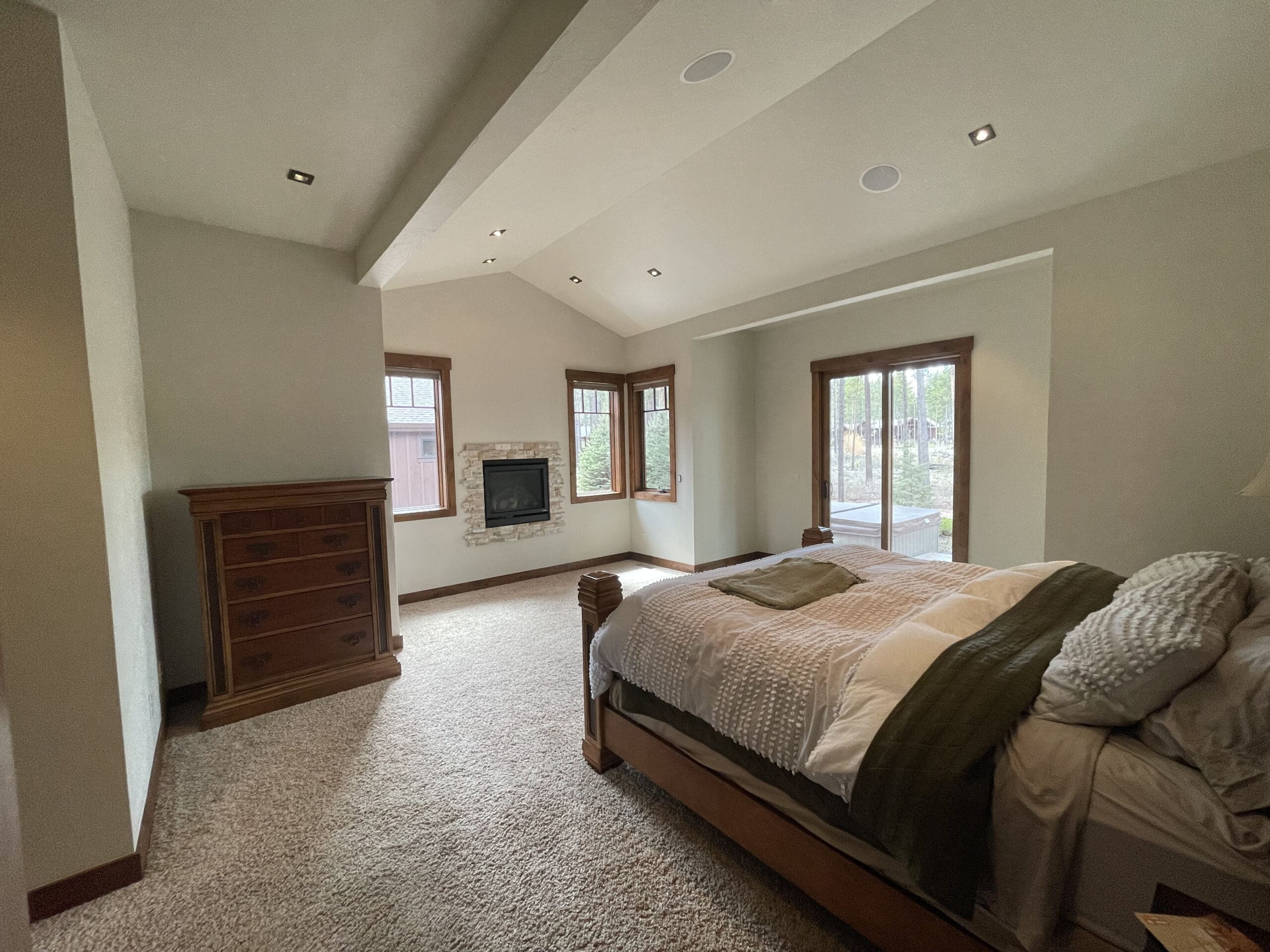
- High or vaulted ceilings: Working on ladders or scaffolding adds significant safety risk and makes it nearly impossible to maintain proper technique.
- Water damage or stains: These require proper assessment, treatment, and specialty primers to prevent bleed-through.
- Texture matching: If repairs require matching existing ceiling texture, this is a skill that takes years to develop.
- Large areas: Painting a single room is manageable. Painting an entire home’s ceilings while maintaining quality is exhausting work that benefits from a professional crew.
- Lead paint concerns: Homes built before 1978 may have lead paint that requires special handling and certifications.
Professional painters also bring efficiency that most homeowners underestimate. What takes a homeowner an entire weekend can often be completed by a professional crew in half a day—with better results and no mess for you to clean up.

Getting the Finish You Want
A smooth, professional-looking ceiling finish isn’t magic. It’s the result of proper preparation, quality materials, correct technique, and attention to environmental conditions. Rush any of these steps, and imperfections will show.
If you decide to tackle your ceiling yourself, give yourself permission to go slow. Buy more paint than you think you need. Set up proper lighting. And accept that your first attempt might require a third coat to get right.
Or, if you’d rather skip the learning curve and get guaranteed results, that’s what professional painters are for.
Ready for Flawless Ceilings Without the Hassle?
Your time and sanity have value. If the thought of spending your weekend wrestling with roller marks and lap lines doesn’t appeal to you, West Rivers Painting is here to help. Our team handles ceiling painting projects of all sizes—from single rooms to entire homes—using the techniques and materials that deliver a flawless finish every time.
We show up on time, protect your furnishings, complete the work efficiently, and leave your home cleaner than we found it. No learning curve. No frustration. Just smooth, beautiful ceilings you’ll enjoy for years.
Call 541-419-3912 today to schedule your free estimate. We’ll assess your ceilings, provide an upfront quote, and answer any questions you have about the process. Your perfect ceiling finish is just one phone call away.