
Your kitchen cabinets are already painted. Maybe they’re chipped, faded, or just the wrong color. Before you rip them out and spend $15,000–$30,000 on new ones, know this: you can repaint kitchen cabinets that have already been painted. Also, it’s one of the smartest investments you can make in your home.
The catch? The prep work determines everything. Skip the right steps, and you’ll watch your new paint peel within months. Follow the professional process, and you’ll get a factory-like finish that lasts 8–12 years.
The Short Answer: Yes, You Can Repaint Kitchen Cabinets
Painted cabinets can absolutely be repainted. In fact, it’s often easier than painting raw wood or stained cabinets because you’re working with a surface that’s already primed and sealed.
The real question isn’t can you repaint them—it’s should you, and what does it take to do it right?
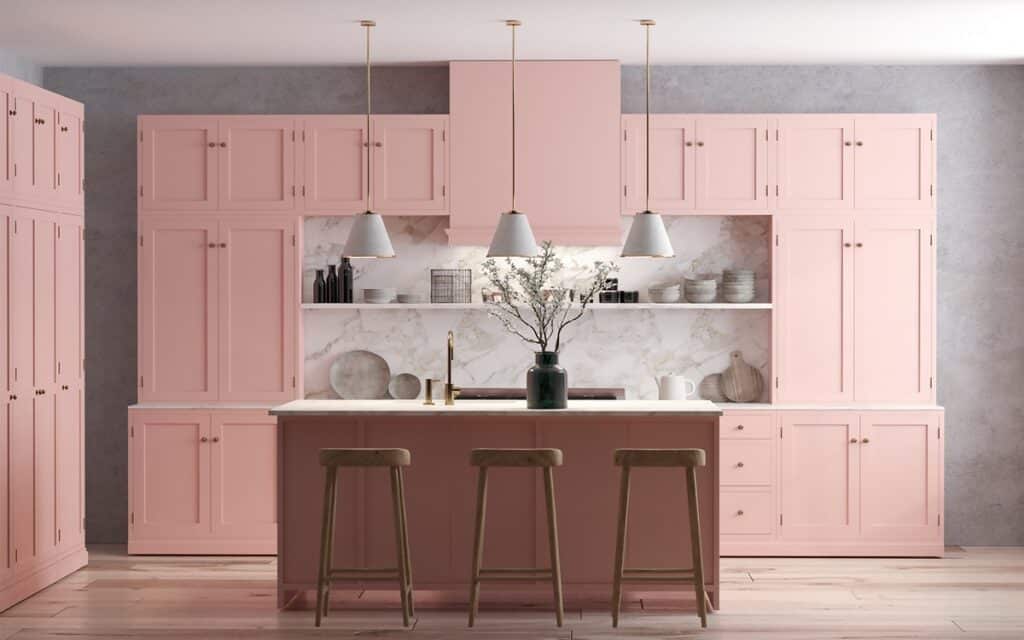
Why Prep Work Makes or Breaks a Cabinet Repaint
Here’s where most DIY cabinet projects fail. The old paint creates a barrier. If your new paint can’t bond to that barrier, it will chip, peel, and flake—sometimes within weeks of application.
Professional cabinet painters spend 60–70% of their total project time on preparation. That’s not an exaggeration. In a typical kitchen that takes 3–5 days to complete, 2–3 of those days are dedicated entirely to prep.
What Professional Prep Looks Like
The professional cabinet repainting process includes:
- Removing all doors, drawers, and hardware. Each piece gets labeled for precise reinstallation.
- Deep cleaning to remove grease and grime. Kitchen cabinets accumulate years of cooking oils that prevent paint adhesion. TSP (trisodium phosphate) or a commercial degreaser is essential.
- Sanding the existing paint. This isn’t about removing the old paint—it’s about scuffing the surface so the new paint has something to grip. 120–150 grit sandpaper creates the ideal surface.
- Filling holes, dents, and imperfections. Wood filler followed by additional sanding creates a smooth, uniform surface.
- Applying a bonding primer. This is non-negotiable when painting over existing paint. Bonding primers chemically adhere to the old finish and provide a foundation for the topcoat.
- Light sanding between coats. Each layer gets scuffed to ensure maximum adhesion.
Signs Your Painted Cabinets Are Ready for a Refresh
Not sure if it’s time? Here’s what to look for:
- Chipping or peeling around handles, edges, or high-traffic areas
- Fading or yellowing from sun exposure or age
- Visible wear patterns where the finish has worn thin
- Outdated color that no longer fits your style or home’s aesthetic
- Sticky or tacky surfaces that never fully cured from the original paint job
DIY vs. Professional Cabinet Repainting: An Honest Comparison
Can you repaint your cabinets yourself? Technically, yes. Should you? That depends on your expectations, timeline, and tolerance for risk.
The DIY Reality
A DIY cabinet repaint typically involves:
- $200–$600 in materials (primer, paint, brushes, sandpaper, cleaners)
- 40–60 hours of labor spread across 2–4 weekends
- Brush or roller application, which often leaves visible texture
- A kitchen that’s unusable during the project
The biggest DIY challenge? Achieving a smooth, factory-like finish. Without spray equipment and controlled conditions, brush strokes and roller marks are almost inevitable.
The Professional Approach
Professional cabinet painters bring:
- HVLP spray equipment for a glass-smooth finish
- Commercial-grade primers and paints formulated for cabinetry
- Controlled spray environments (either on-site booths or off-site facilities)
- Experience identifying and solving adhesion issues before they become problems
- Warranties backing the work
Professional cabinet repainting in [service area] typically costs $3,000–$7,000 depending on kitchen size and condition—roughly 15–25% of cabinet replacement cost.
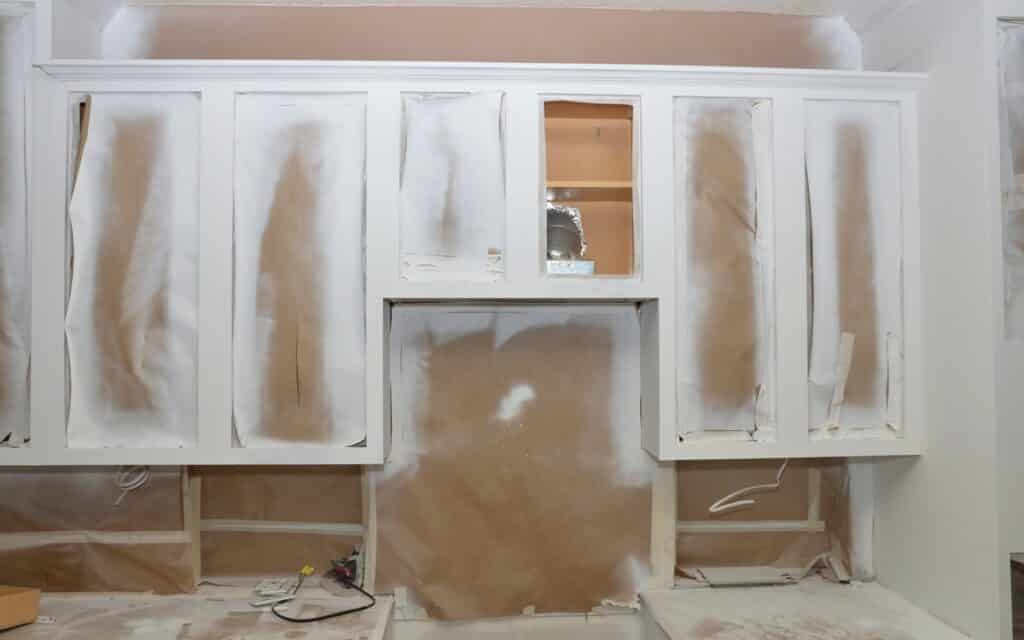
What Can Go Wrong When Repainting Cabinets (And How to Avoid It)
Poor Adhesion
The problem: New paint peels or chips within months.
The cause: Inadequate cleaning, insufficient sanding, or skipping bonding primer.
The solution: Never skip the degreasing step. Always use a bonding primer over existing paint. Sand between every coat.
Visible Brush Marks and Texture
The problem: The finish looks amateur with obvious brush strokes or orange peel texture.
The cause: Brush or roller application without proper technique, or paint that’s too thick.
The solution: Spray application produces the smoothest results. If brushing, use a high-quality brush, thin the paint appropriately, and apply multiple thin coats rather than one thick coat.
Sticky Cabinets That Never Fully Cure
The problem: Doors stick to frames, drawers stick in openings, and the surface feels tacky.
The cause: Insufficient drying time between coats, high humidity during application, or low-quality paint.
The solution: Allow proper cure time (often 2–3 weeks for full hardness). Paint in controlled humidity. Use cabinet-specific paints with hardeners that cure fully.
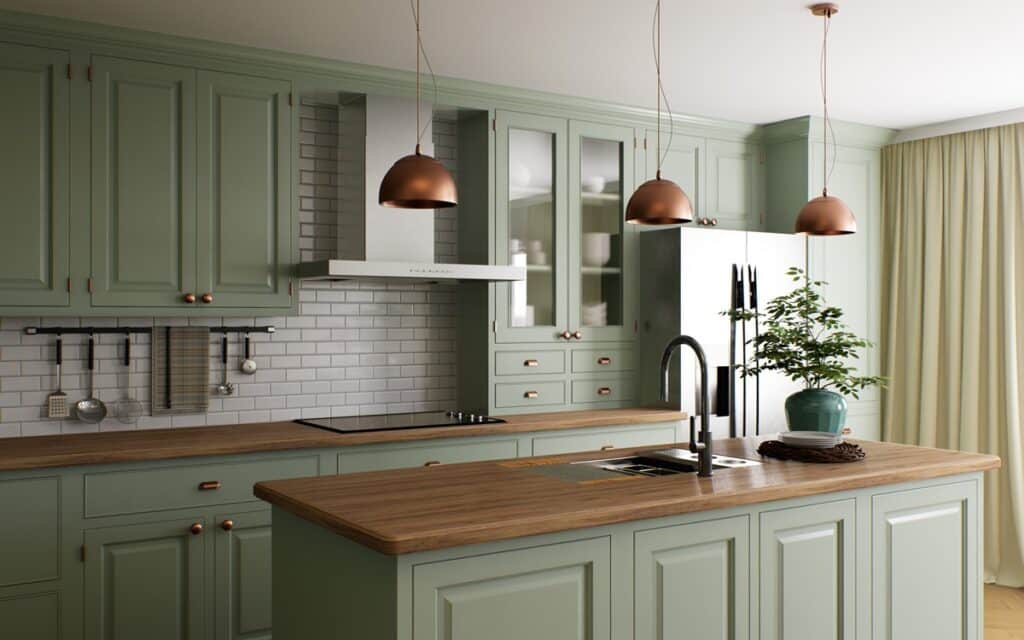
Best Paints for Repainting Kitchen Cabinets
Not all paints work for cabinets. Kitchen cabinets face daily abuse—grease, moisture, constant touching, and UV exposure. Standard wall paint won’t hold up.
Professional cabinet painters typically use:
- Alkyd/oil-based paints for maximum durability and a hard, furniture-like finish
- Hybrid enamel paints that combine oil-based durability with water-based cleanup
- Cabinet-specific acrylics formulated with hardeners for high-traffic surfaces
- Conversion varnishes or lacquers (professional application only) for the most durable factory-quality finish
How Long Does It Take to Repaint Kitchen Cabinets?
For a typical kitchen with 20–30 cabinet doors and drawer fronts:
- Professional timeline: 3–5 days for on-site work, or 1–2 weeks if doors are sprayed off-site
- DIY timeline: 2–4 weekends, sometimes longer depending on drying conditions
Keep in mind that paint needs time to fully cure. While cabinets may be dry to the touch in 24–48 hours, they won’t reach full hardness for 2–3 weeks. During this time, handle them gently and avoid placing heavy objects on shelves.
Is Repainting Cabinets Worth It?
If your cabinets are structurally sound—no water damage, no warping, no falling-apart hinges—repainting is almost always worth considering. You’ll spend a fraction of replacement cost and get a result that can look just as good as new cabinets when done professionally.
The kitchen is typically the highest-ROI room for home improvements. A cabinet refresh can dramatically change the feel of the space without the disruption, dust, and expense of a full remodel.
Get a Free Cabinet Painting Estimate
West Rivers Painting provides professional cabinet repainting services throughout Central Oregon. We’ll assess your cabinets’ condition, discuss color options, and give you a detailed quote—no obligation, no pressure.
If you’re ready to transform your kitchen without the cost of new cabinets, call us today at 541-419-3912 for your free consultation.